

The Duct-Tape Stack
We recently sat down with wedding professionals across different specialties — planners, DJs, rental companies — to understand how they actually run their businesses day to day. The tools were different, but the pattern was identical.
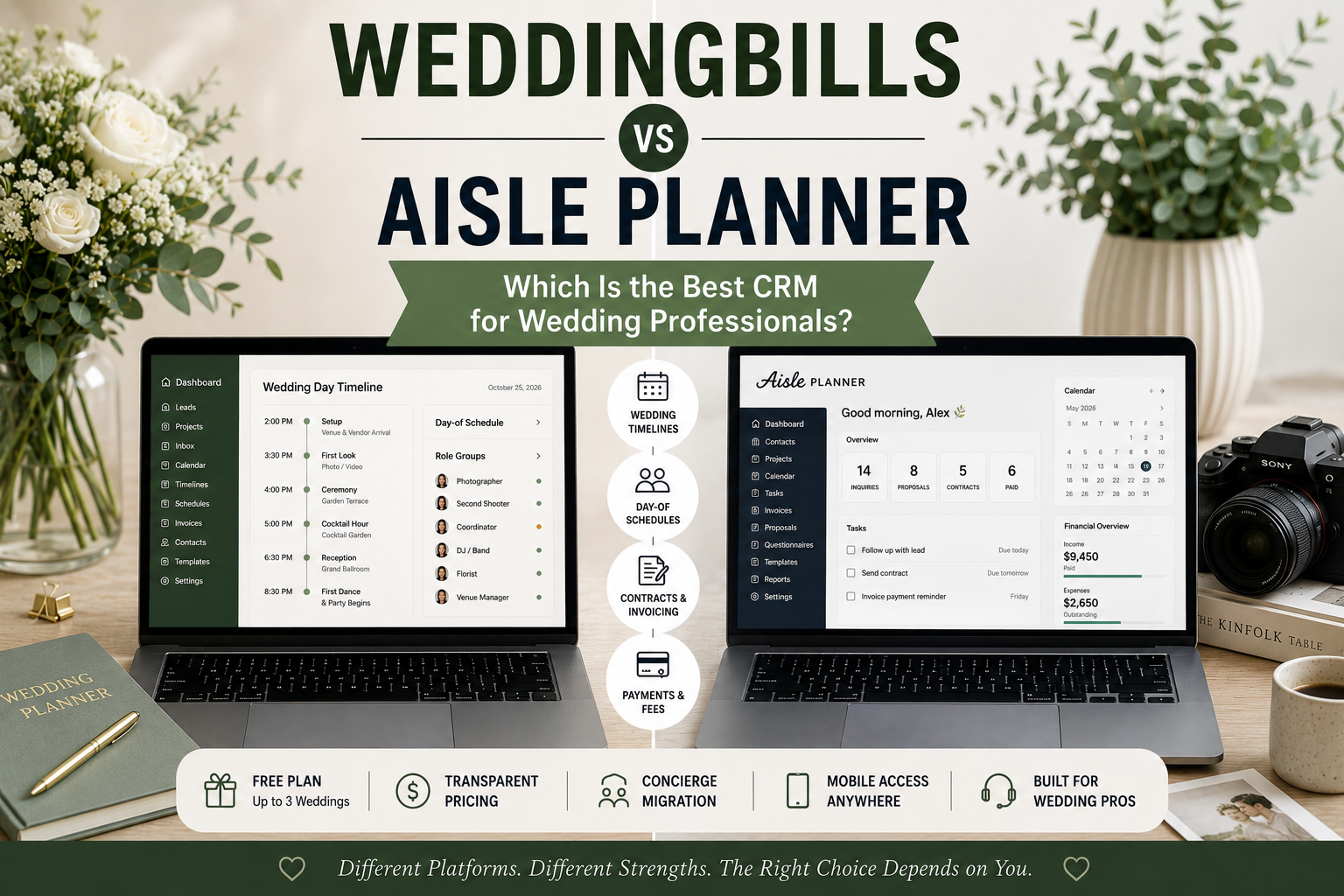
A planner described using Aisle Planner for day-of coordination, Prism for floor plans, and Wix for contracts, invoicing, and lead capture. Three separate platforms, three separate logins, three separate places where information lives. When it came time to send the team an event schedule, none of those tools handled it well enough. So she built schedules in Canva and sent them out manually.
A DJ described using Google Docs for contracts and accepting payments through multiple different methods depending on what the couple preferred. Consultations were tracked in spreadsheets. Follow-ups lived in his head or his inbox. He called it "the old way" — and said he was on his third attempt at finding software that could actually consolidate everything.
Neither of these vendors is disorganized. They're resourceful. But resourcefulness has a cost.
What the Scattered Stack Actually Costs You
Information loss. This was the number one pain point every vendor we spoke with identified. When client details, contracts, payment records, and timelines live in different systems, things fall through the cracks. A DJ managing multiple consultations described doing "double duty" — entering the same information in multiple places just to keep track. A planner said her team constantly lost details because there was no single system for schedules. The information existed somewhere. Finding it was the problem.
Money. One planner estimated her annual software spend at $5,000 to $6,000 across all her tools. That's Aisle Planner, Wix, floor plan software, and various add-ons. And that's before factoring in payment processing fees. When you're paying for five tools that each do 20% of what you need, you're overpaying for an incomplete experience.
Time. Every wedding requires you to manually move information between platforms. Contract details don't auto-populate into invoices. Payment confirmations don't update your tracking sheet. Timeline changes don't notify your couple or your team. You become the human middleware — copying, pasting, and double-checking across tabs.
Lead quality. Vendors using platforms like WeddingPro (The Knot and WeddingWire) for lead generation are increasingly frustrated. One planner told us she stopped using WeddingPro entirely after three months of zero real leads and an inbox full of scam inquiries — all while paying premium advertising rates. When your lead source is unreliable, it doesn't matter how good your downstream tools are.
Professionalism. Couples notice when the experience is fragmented. Signing a PDF contract over email, then receiving a separate invoice from a different tool, then getting a Venmo request — it doesn't feel cohesive. It doesn't feel like a business that has its act together, even if you absolutely do.
What Vendors Actually Need
The fix isn't adding another tool to the stack. It's replacing the stack with something designed for the way wedding businesses actually work.
That means contracts and invoices should be connected. When a couple signs, the payment schedule should activate automatically. No manual entry. No separate systems.
It means day-of scheduling should be built in — not something you build in Canva because your planning tool can't handle it. The timeline should be live, adjustable, and shareable with your team and your couple. When you're in a client meeting and need to shift a time block, you should be able to do it on the spot — with dependencies that keep everything else aligned.
It means couples should have visibility. Instead of emailing you to ask what's been paid or what's coming next, they should be able to see it themselves — in a shared workspace that keeps everyone aligned.
It means payment flexibility matters. Cards, ACH, eCheck, financing — couples have different financial situations, and your platform should accommodate that instead of forcing one payment method.
And it means all of this should live in one place. Not scattered across Aisle Planner, Wix, Canva, Google Docs, spreadsheets, and text messages.
The Consolidation Math
When we showed vendors the math — replacing a $5,000–$6,000 annual tool stack with a single platform at around $1,200 — the reaction was immediate. That's not a marginal savings. That's thousands of dollars freed up for marketing, team growth, equipment, or just financial breathing room during slow season.
But the money is only half the story. The real value is eliminating the information loss, the double entry, the Canva workarounds, and the constant context-switching that eats hours every week. When everything lives in one system, you stop losing information — and start running your business instead of managing your tools.
The Switching Question
The most honest objection we heard came from a planner who said: "I know I'm overpaying. But switching during busy season feels impossible." That's a real concern. Which is why the best approach isn't a hard cutover. It's testing a new platform alongside your current tools — ideally with a free tier that lets you set up a real wedding and see how it feels before committing.
Most vendors don't switch tools because they're angry. They switch because they're tired. Tired of the workarounds, the manual tracking, the scattered experience they know doesn't reflect the quality of their work.
If that sounds familiar, it might be time to stop duct-taping — and start building on something designed for this.
Still juggling contracts, invoices, and endless email threads? WeddingBills brings your contracts, payments, and project timelines into one shared workspace — so you can spend less time on admin and more time serving your couples. Join free and see how simple your workflow can be. → Start your free vendor account today



.jpg)
.jpg)
.jpg)






.png)

